Placemaking Week 2025 made one thing clear: culture is not a final add on, but a strategic factor at the front end.
During Placemaking Week Europe 2025 in Reggio Emilia, one central question ran through the four day programme: how do you create places that genuinely work for people. Across the city, urban practitioners, designers, policymakers and community builders came together to exchange experiences and critically examine projects from the field.

What characterised this edition was its strong focus on practice. Many sessions and site visits made clear just how complex placemaking is in reality. Strong design alone is not enough. Without careful attention to identity, programming and local ownership, impact often remains superficial.
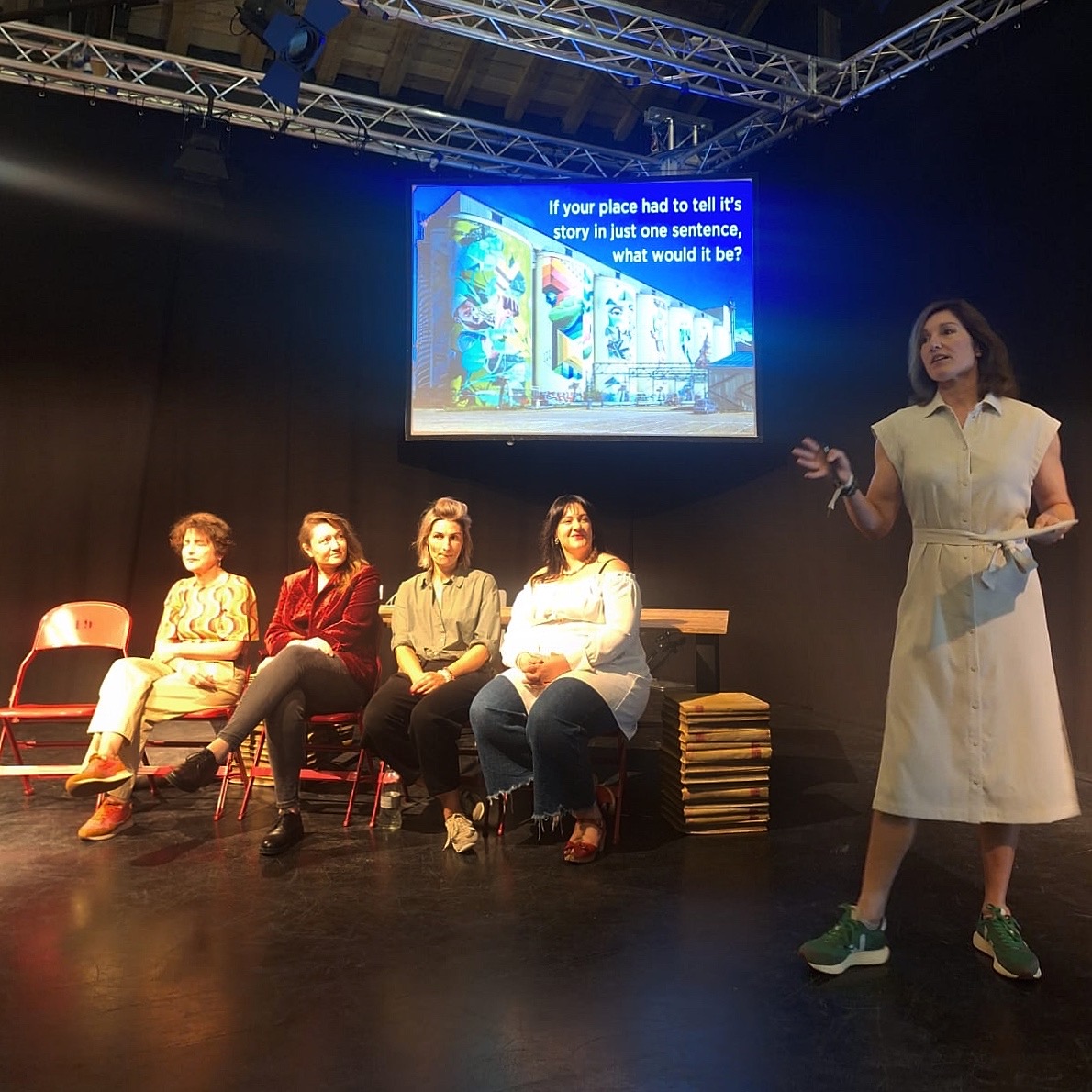
Within this broader conversation, Rinske Brand contributed a session on the role of culture in placemaking and area development. The discussion addressed a familiar pattern seen in many European cities: the tendency to start with physical interventions, while real breakthroughs often depend on organising meaning, use and engagement from the outset.
The exchange in Reggio Emilia once again showed how the field is evolving. Increasingly, cities are looking for ways to strengthen public space not only spatially, but also socially and culturally. There is growing recognition that culture is not an add on at the end of a process, but a strategic factor at the front.
Placemaking Week Europe thus confirmed a broader shift already visible across the field. Those working on urban transformation today are not only shaping space. They are carefully connecting place, programme and community. That is where lasting urban quality begins.
